
Make your organization work better
We combine organizational psychology, evidence, data analysis and AI to improve leadership, cooperation, decision-making and business performance.
Organizational psychology for measurable change
The Gauss Institute helps organizations improve the way people, processes and decisions work together. We begin with the actual business challenge — not with a ready-made training programme or a fashionable management concept.
Our work combines organizational psychology, more than four decades of research and consulting experience, advanced analysis and practical implementation. We use AI where it improves the quality or speed of analysis, while keeping professional judgement and organizational context at the centre of every decision.
What you can expect
- Evidence before assumptions — we test business intuition against data and observable behaviour.
- A systemic perspective — we examine people, roles, goals, processes and organizational conditions together.
- Tailored implementation — recommendations are translated into decisions and changes in real work.
- Clear outcomes — we agree what should change and how progress will be assessed.
What we help organizations change
We work with owners, boards, senior leaders and HR teams on challenges where human behaviour and organizational design directly affect business results.
Organizational diagnosis
We identify the real sources of inefficiency, decision bottlenecks and risks in the way roles, people and processes are arranged.
Leadership development
We develop managers through work on real organizational challenges, supported by diagnosis, observation and focused behavioural change.
Strategy alignment
We help owners and leadership teams translate strategic priorities into aligned goals, decisions and everyday management practices.
Effective teams and cooperation
We diagnose what happens between team members and design conditions that enable knowledge, competences and different perspectives to be used effectively.
Competency models
We build evidence-based competency models that support selection, development, performance reviews and consistent people decisions.
Family businesses and start-ups
We support succession, board effectiveness and founder-team decisions where personal and organizational risks are closely connected.
How we work
1. Define the business question
We clarify what decision must be made, what result matters and what assumptions need to be tested.
2. Diagnose the system
We gather relevant evidence through interviews, observation, organizational data, psychometric methods and process analysis.
3. Design and implement change
We work with the people responsible for the result and translate conclusions into specific actions, roles and management routines.
4. Review the outcome
We assess what changed, identify remaining constraints and provide recommendations for the next stage.
This approach prevents organizations from treating symptoms while leaving the underlying causes untouched.
Selected outcomes from our work
With the support of the Gauss Institute consultants, I moved from AutoCAD to Excel.
Technical Director — process improvement project
A transparent ownership strategy reduced conflict and enabled the owners to focus on the company’s success.
Family business — strategy alignment
We developed a new, objective method for evaluating participants in a prestigious competition.
Top HR Manager — competency model
The people behind the Gauss Institute
Darek Ambroziak is an organizational psychologist focused on organizational performance, leadership development and cooperation. He leads the Gauss Institute and works directly with owners, boards and managers.
Dr Victor Wekselberg is an organizational psychologist with more than forty years of experience in research and consulting. His work focuses on cooperation, motivation and the development of organizations, teams and individuals.

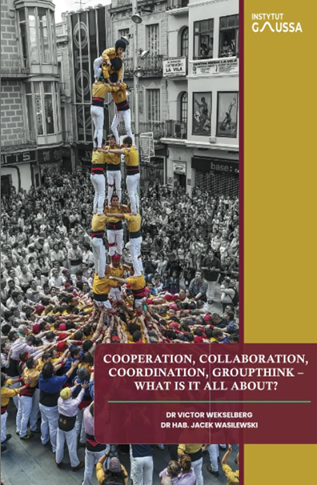
Cooperation is not simply working together
Our English-language book examines the differences between cooperation, collaboration, coordination and groupthink. It offers managers, consultants and educators a precise framework for understanding why talented people do not automatically create an effective team.
Let us discuss your organizational challenge
Tell us what is not working as well as it should. We will help you distinguish symptoms from causes and identify the next useful step — without forcing the problem into a standard solution.
